Tag: metal

  • The Punk and Metal Roots of DIY Finance: Empowerment Through Knowledge

    The Punk and Metal Roots of DIY Finance: Empowerment Through Knowledge

    What do hardcore punk shows and personal finance have in common? More than you might think. Both celebrate DIY spirit, subverting mainstream norms, and calling BS on bloated institutions that profit off complacency. If you’ve ever gathered a ragtag group of friends to start a band in your garage, you already know what it feels like to forge a path with minimal resources and a maximum sense of rebellion. That same ethos can guide your approach to saving, investing, and managing money: no middlemen, no fluff, just raw, authentic control over your financial destiny.

    You’re not alone in feeling like large financial institutions don’t really have your best interests at heart. Much like you never trusted the slick, corporate label suits pushing out formulaic rock, you probably don’t trust banks that overcharge fees and lure you into subpar investments. If the raw power of a distortion pedal and a few power chords can start a cultural revolution, why can’t you channel that same energy to master your own finances? Welcome to the world of DIY finance—where knowledge is power, and you’re the one calling the shots.

    A Brief History of DIY Culture

    Zines, Underground Gigs, and Financial Freedom

    Before the internet made everything instantly shareable, the punk and metal scenes thrived on zines—handmade, photocopied magazines distributed by fans. These gritty, no-budget publications delivered unfiltered news and band interviews to local communities who were hungry for realness. It was a total middle-finger to mainstream media channels. Similarly, DIY finance flips off the conventional wisdom that says you must rely on big brokerages, pricey advisors, or complicated mutual funds.

    A report from the Federal Reserve highlights how self-education and a willingness to explore alternatives can break cycles of debt and poor savings habits. Just like a zine gave you the raw scoop on your favorite band, independent financial resources and online communities offer you unfiltered advice and tools you can use right now—often for free.

    Tools for DIY Investing

    Apps, Platforms, and Community Forums

    You don’t need to beg a record label to distribute your music in 2025—nor do you need a “traditional” brokerage account that charges you an arm and a leg to buy a few stocks. From user-friendly stock trading apps to decentralized crypto exchanges, your smartphone can be your backstage pass to the financial world.

    • Robo-Advisors: Platforms like Betterment or Wealthfront use algorithms to manage your portfolio.
    • Commission-Free Brokers: Apps like Robinhood and Webull let you trade stocks and crypto with zero commissions.
    • Decentralized Finance (DeFi): If you’re feeling extra rebellious, DeFi platforms allow peer-to-peer lending, borrowing, and yield farming without a central authority.

    And guess what? You can rock your self-made finance scene while sipping from unique coffee mugs for her if you want a little flair that screams, “Yes, I’m forging my own path, and I’m doing it with style.” Because who says your coffee mug can’t show off your bold personality or your DIY approach?
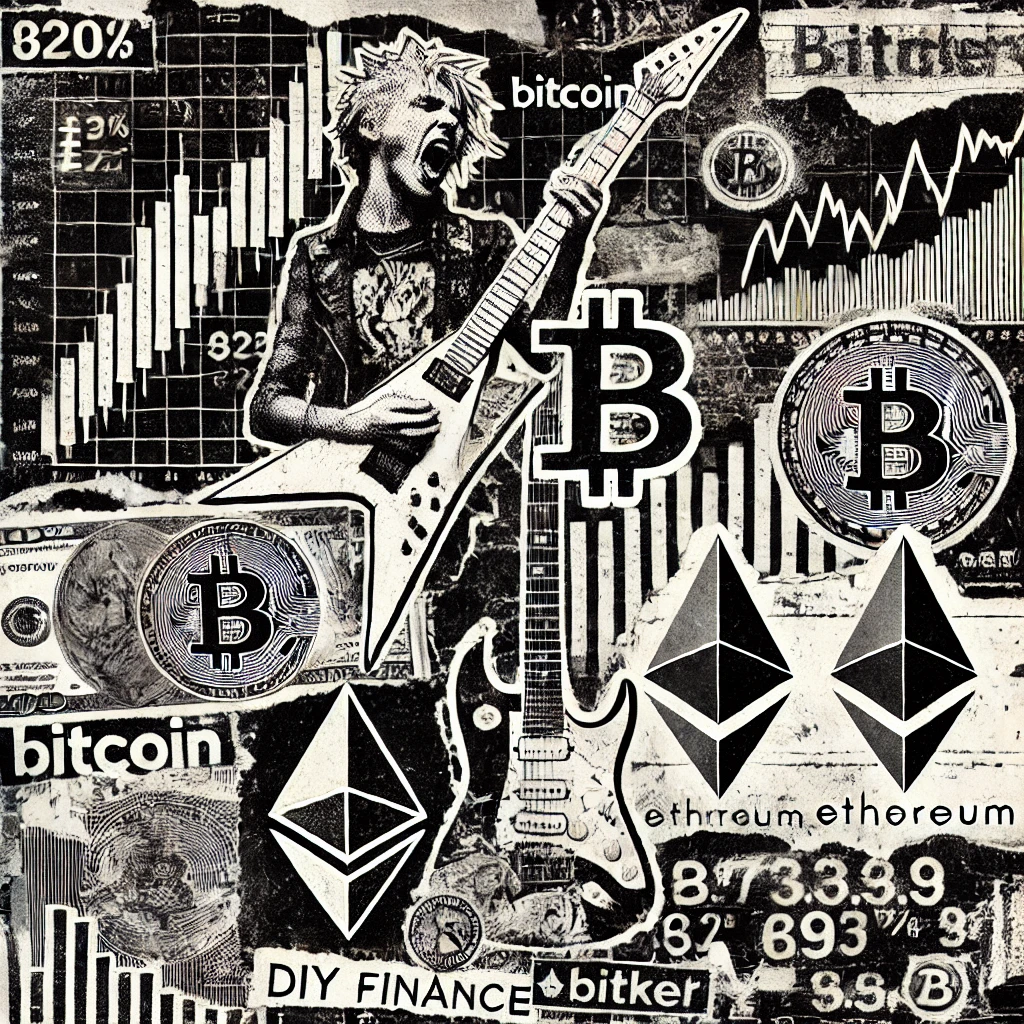
    collage of DIY finance imagery, including guitars, stock charts, and crypto logos, in a punk zine style

    Forge your own future, one riff and one trade at a time.

    Embracing Risk, Avoiding Exploitation

    The Rebellious Spirit of Self-Defense

    Punk and metal communities have always been about self-defense: from defending the pit to shielding subcultures from corporate whitewashing. Why not apply the same concept to your finances? Most people who haven’t taken the time to learn about budgeting, investing, and credit get trampled by hidden fees or unscrupulous advisors.

    A study by the Consumer Financial Protection Bureau (CFPB) indicates that many financial pitfalls—such as spiraling credit card debt or unreasonably high interest rates—can be mitigated with basic know-how and discipline. In a sense, you’re learning how to block a random shove in the pit. No one’s going to watch your back if you won’t.

    If you’re starting to wonder if there’s more going on behind the scenes of our financial system, you’re not the only one. Why not keep a conspiracy theorist coffee mug at your desk as a reminder to question everything? After all, metal and punk fans have a long history of bucking authority. Might as well carry that attitude into your 401(k) or crypto wallets, too.

    A Rallying Cry for the DIY Investor

    Knowledge = Empowerment

    • Budgeting: Like practicing guitar scales, budgeting is the fundamental skill that underpins everything else. If you can’t handle your day-to-day money, no fancy stock pick will save you.
    • Investing: Once you have extra cash, put it to work. Whether it’s a well-balanced stock portfolio, a few well-researched crypto bets, or some real estate crowdfunding, the point is to direct your cashflow into assets that can grow.
    • Continuous Learning: Punk and metal scenes thrive on discovering new bands, new sounds, new ways of self-expression. Apply that thirst for discovery to your finances. New platforms and opportunities pop up every day—keep exploring them.

    At its heart, DIY finance isn’t just about money—it’s about self-determination. You don’t let corporate radio stations decide what music you should listen to; why let a corporate advisor decide how to invest your hard-earned cash? The tools are out there; all it takes is the same rebellious spark that propelled your favorite band from garage nobodies to genre-defining legends.

    From gritty zines to unstoppable underground movements, punk and metal have always advocated for taking control when the mainstream just won’t cut it. The same is true for your finances: the less you rely on stuffy institutions, the more you learn, experiment, and define your own path, the more empowered you become. It’s not about being a lone wolf with no guidance; it’s about choosing resources and communities that respect your autonomy rather than draining it.

    Next time you’re blasting a relentless riff, picture applying that energy to evaluating your portfolio or tinkering with a new investment platform. The rebellious spirit that shaped your musical tastes can transform how you see money. Remember, every movement started with just a few idealists who refused to accept “the way things are.” You can carry that flame—channel the raw power of punk and metal into your wallet, your retirement account, or your everyday spending decisions. Because if there’s one thing these subcultures taught us, it’s that real change starts from the bottom, with people who dare to do it themselves.

  • The Lyrics of Extreme Metal: Poetry of Darkness and Despair?

    Ever wondered if there’s more to the guttural growls and blast beats than just… noise? Well, buckle up, because we’re about to dissect the lyrical landscape of extreme metal – from the blackest of black metal to the most brutal of brutal death. I’m Steve, by the way, and I’m here to tell you: there’s poetry in the pandemonium, and it’s often a hell of a lot smarter than people give it credit for.

    Deciphering the Darkness: Common Themes

    Let’s be real: if you listen to metal, you’re probably already familiar with the core themes. Death, destruction, the end of the world as we know it, and the failings of humanity are all mainstays. However, it’s in *how* these themes are approached that things get interesting. Some bands wallow in nihilism, exploring the futility of existence with a bleak, unflinching gaze. Others use these themes as a springboard for social commentary, critiquing war, environmental destruction, and political corruption. Then there’s the whole realm of fantasy and mythology, which often serves as an allegory for modern anxieties.

    The sheer breadth of topics is amazing. A lot of the earliest metal bands were into stories from mythology and, I would argue, were trying to create their own version of a myth. While some themes overlap across subgenres, each one often brings its own take. For instance, black metal tends to lean towards anti-religious themes and the worship of nature, whereas death metal is often more concerned with the gore of physical decay. It all depends on the artist’s vision, their influences, and what they want to communicate.

    Philosophical Underpinnings: Nietzsche, Camus, and Beyond

    It’s not all just mindless screaming, folks. Many extreme metal lyrics are surprisingly philosophical, drawing on the works of thinkers like Friedrich Nietzsche, Albert Camus, and even more obscure theorists. The exploration of existentialism, nihilism, and the absurd is a major theme. You can often find lyrics grappling with questions of free will, the meaning of life (or lack thereof), and the nature of good and evil.

    For example, Nietzsche’s concept of the Übermensch – the individual who transcends societal norms and creates their own values – is a common thread, particularly in black metal. Camus’ philosophy of the absurd, the idea that life is inherently meaningless, yet we must embrace it anyway, also gets explored. The artists use music to communicate their thoughts and the concepts they are studying.

    This might sound like highbrow academic stuff, but remember, the best art reflects reality. I often see a parallel in the stock market – the constant struggle against chaos, the search for order in the face of volatility. It’s all about finding your own path, making your own decisions, and weathering the storms. If you’re looking for a different, more in-depth view, check out this article from the Stanford Encyclopedia of Philosophy: Nietzsche. It’s a tough read, but it is worth it.

    Literary Devices: Beyond the Blasts

    The writers of extreme metal lyrics are often masters of poetic techniques, even if you can’t understand the words at first. They use vivid imagery, powerful metaphors, and alliteration, assonance, and consonance to create a compelling effect. All of these techniques elevate the song’s message beyond the screaming and the drumming. The effect of these devices creates a unique form of poetry.

    Imagery is a big one. Think about the descriptions of a rotting corpse, the desolate landscape, or the fiery depths of hell. These aren’t just descriptions, they’re designed to evoke a specific emotional response in the listener, building an immersive experience. The imagery and creative storytelling can be quite striking. Just as I look at a chart and find patterns and clues, so too do the lyrics offer insight.

    Even the structure of the lyrics matters. Many bands are employing unique song structures and poetic forms to create a memorable experience. All of the different techniques can be a little overwhelming at first. So, go back to the basics and dissect them one by one. It’s like learning to read charts; you have to crawl before you can walk. If you’re interested in learning the basics of poetry, check out this guide from the Poetry Foundation: Poetry Glossary.

    The Controversy (and the Beauty)

    Extreme metal has always been controversial. The violent imagery, the satanic themes (though they’re often just artistic expressions), and the raw aggression have made it a target for criticism. It has been accused of promoting violence, misogyny, and nihilism. However, you can’t judge a book by its cover, and you should not just listen to a song and draw a conclusion. Sometimes, the goal is to provoke thought and start a discussion.

    The truth is far more complex. For many listeners, extreme metal is a cathartic outlet for anger, frustration, and despair. The intensity of the music provides a safe space to explore dark emotions and to process complex ideas. Metal acts as a way to connect. It’s a shared experience that transcends the music itself. It can give voice to people who might otherwise feel alone.

    There’s a surprising amount of nuance and intelligence in the music. Just as a savvy investor needs to look beyond surface-level indicators, anyone who is willing to look beyond the chaos will find beauty, poetry, and even moments of profound insight.

    So, the next time you’re cranking up the volume, remember to listen closely. You might be surprised by what you discover. Who knows, maybe this newfound appreciation of metal will influence your investments. You might start thinking, ‘This is going to make a killing!’ If you’re looking for a perfect way to take notes and plan out your next big investment idea, check out these funny coffee mugs for guys. They will help with your focus and you can look cool while doing it.

  • Beyond the Blood: Extreme Metal’s Visual Mayhem

    Corpse paint. Spiked gauntlets. Stage props that could make a Lovecraftian horror blush. For anyone who’s ever caught the eye of extreme metal, the visuals are just as crucial as the sonic assault. It’s a complete package – a statement. It’s a damn near religious experience.

    The Canvas of Chaos: Album Art and Beyond

    Let’s be honest, we’ve all judged a book by its cover. Album art in extreme metal isn’t just eye candy; it’s a visceral introduction to the aural chaos within. It’s the visual prelude to the auditory apocalypse. Consider the iconic artwork of Slayer’s “Reign in Blood” – the blood-soaked, demonic imagery instantly sets the tone. It screams, “Prepare to have your eardrums obliterated!” These visuals tap into the primal subconscious, playing on fears and fascinations.

    This goes way deeper than mere aesthetics; it’s about world-building. Artists like Dan Seagrave, known for his work with bands like Morbid Angel and Suffocation, are masters of this dark art. His work is a portal. His album covers depict hellscapes, gnarled creatures, and scenes of absolute despair. These aren’t just images; they’re invitations to explore the artist’s terrifying universes. The complexity of these images and their meanings goes hand in hand with the complexity of the musical composition.

    The artistry found in album design and other visual concepts for metal bands is an extension of the music’s themes. The design often reflects the lyrics, the overall feeling, the genre, and even the band’s personal life. These choices are also often carefully curated to appeal to the fans, whose support keeps the art alive. This can be seen with the wide use of symbolism. Take a band like Behemoth. Their album art, laden with religious iconography and occult symbols, directly mirrors the band’s lyrical themes of blasphemy and rebellion. It’s a powerful combination.

    Corpse Paint and the Theatre of the Macabre

    Corpse paint – the white face, the black eyes, the inverted crosses – it’s the undeniable uniform. But what’s the point? Sure, it’s shocking, but there is a reason beyond mere shock value. It’s about transformation. It’s the ritualistic face of death, an extreme metamorphosis from the ordinary. The bands become something else, something powerful.

    It’s a theatrical mask. Think of it as a visual gateway, allowing the artists to disappear into their performances. It allows them to transcend the mundane, allowing them to channel the darkest aspects of the human psyche. It’s not about hiding; it’s about revealing something deeper, something primal.

    These visual choices aren’t just random; they have roots. The use of corpse paint, for example, can be linked to the theatrical traditions of mime and kabuki, traditions that require the performer to transform their appearance. To take on a new persona. The use of these traditional concepts to inform a modern act of performance art is a testament to the artist’s creativity. You can see the roots, too, in the traditions of the theatre of the absurd. Britannica dives into these concepts more. It’s a transformation, a performance, a complete immersion.

    Stagecraft: The Amplification of Horror

    The stage setup is your second layer of visual assault. Think massive backdrops depicting hellscapes. Pyrotechnics that would make a pyromaniac jealous. It’s not about playing a gig; it’s about creating an experience. Think of Dimmu Borgir’s stage shows – elaborate costumes, fog machines, and a theatrical presentation that elevates the music into a fully immersive spectacle. They aren’t just playing; they’re summoning demons.

    Stage presence matters. The way the band moves, the lighting, the use of props – everything is carefully choreographed. It’s not just about playing the songs; it’s about controlling the atmosphere, guiding the audience through a journey into darkness. The visual environment has a profound impact on how we experience the music.

    You could be seeing a group like Mayhem, whose early stage performances were notorious for their brutality, or a group like Cradle of Filth, with their gothic, vampiric imagery. Regardless of the band, the stage setup is a visual language that communicates the core values of the artist. It’s an extension of the artist’s personality, musical style, and overall message. The visual and the auditory work in tandem. It is a complete sensory overload.

    Beyond the Surface: Meaning and Message

    Extreme metal’s visual language isn’t just for shock value. It’s a vehicle for expressing complex ideas, exploring taboo themes, and challenging societal norms. Many metal bands use their art to explore themes of societal decay, environmental destruction, and philosophical concepts.

    The imagery is a form of storytelling. It can be a powerful way to communicate complex ideas and emotions. It’s a visual conversation that deepens the experience and enriches the connection between the band and the audience. The visuals are often intertwined with the themes and messages of the music. Taylor & Francis Online dives into the psychology of metal and how the visual presentation can further these ideas. The whole experience is about immersing the listener in the artistic vision.

    The visual aspects of extreme metal are not simply an add-on; they’re an integral part of the artistic whole. It’s a visual representation of the music’s core themes. If you’re planning on being a day trader, you need to be able to immerse yourself in the situation, focus, and grind. You need to take everything in and find the value in it.

    You need a killer cup of coffee to get you through the day. Just like a killer album helps you get through the evening. Which is why I’m always ready to sell you a day trader coffee mug. It is literally a match made in heaven.