Month: November 2025

  • Crypto Investing: High Risk, High Reward? Gil’s Stockbroker Take

    Investing in cryptocurrency. Sounds exciting, doesn’t it? It certainly has the younger crowd all worked up. And, frankly, it’s a lot more interesting than the endless parade of quarterly reports I used to pore over in my old life. But as a seasoned investor, one who witnessed the dot-com boom and bust from the thick of the action, I’m here to tell you, it’s not all Lambos and moonshots. There’s a distinct possibility your investment could go the way of my first stockbroker’s toupee – poof, gone.

    The Allure of the Digital Gold Rush

    The appeal is undeniable. Cryptocurrencies promise astronomical returns, decentralized control, and a chance to stick it to the man – or at least, the established financial institutions. Bitcoin, Ethereum, and a plethora of altcoins have shown the potential for dramatic gains. And, let’s be honest, who doesn’t like the idea of multiplying their money overnight? It’s a siren song, luring investors with the promise of wealth beyond their wildest dreams. But, like a perfectly brewed espresso, the experience of a quick buck can leave a bitter aftertaste.

    According to research from the Securities and Exchange Commission (SEC), the volatility of cryptocurrencies is far greater than traditional assets. This means the potential for rapid gains is matched by the risk of equally rapid losses. They’re like a caffeinated version of the market, where every trade is a shot of espresso – intense and potentially addictive.

    Understanding the Risks: More Than Just Volatility

    It’s not just the swings, however, that one should consider. The crypto landscape is rife with risks. One major concern is the regulatory uncertainty. Governments worldwide are grappling with how to regulate cryptocurrencies, and the lack of clear rules can create instability. Another is the prevalence of scams and fraudulent schemes, which can be devastating for investors. And let’s not forget the security risks – hacking, wallet vulnerabilities, and the potential for lost digital assets. It can be like trying to navigate a dark alley with a map drawn on a napkin.

    One major area to understand is market manipulation. The lack of robust regulations and oversight makes crypto markets susceptible to price manipulation, where whales can orchestrate pump-and-dump schemes, wiping out the uninitiated. A Federal Reserve study found that such activity is more common in crypto than in traditional financial markets.

    The Long Game: Approach Crypto with Caution

    If you’re still considering entering the crypto arena, approach it like you would a complex, rare varietal of coffee. Do your research, understand the fundamentals, and never invest more than you can afford to lose. And most importantly, have a plan. Just as you wouldn’t brew a batch of coffee without considering the grind size or water temperature, don’t invest in crypto without a well-thought-out strategy. I’d never put my beans in a grinder without weighing them, so why would you invest without doing the same diligence?

    Diversification is key. Don’t put all your eggs in one basket – or, in this case, all your Bitcoin in one wallet. Spread your investments across different cryptocurrencies, and consider including traditional assets like stocks and bonds in your portfolio. This isn’t a get-rich-quick scheme; it’s a marathon, not a sprint. Remember the old adage: slow and steady wins the race.

    The Importance of Due Diligence

    Don’t just take my word for it. Dig deep and understand the technology behind each cryptocurrency. Read white papers, follow reputable analysts, and stay informed about market trends. Don’t let your decisions be swayed by hype or social media noise. It’s too important to treat lightly.

    Understand the tokenomics. How many coins are in circulation? What is the project’s roadmap? Who are the key players? These are the crucial questions that can help you separate promising investments from speculative fantasies. It takes the same care as choosing the right grinder; you wouldn’t use a blade grinder for espresso, would you?

    Gil’s Final Thoughts

    Crypto is a wild frontier. It’s got the excitement of a new coffee blend, a blend you’re not sure if it will be a hit or a miss. And like that first sip, it’s going to be a gut check. Be cautious, be informed, and never stop learning. And, hey, if things go south, at least you can drown your sorrows in a damn good cup of coffee. Speaking of which, sometimes I wish I’d invested in coffee and a black metal coffee cup years ago… at least then I’d be guaranteed a good morning.


  • From Grinds to Gains: How Coffee Fuels the Modern Trader’s Mindset

    From Grinds to Gains: How Coffee Fuels the Modern Trader’s Mindset

    Waking Up to Opportunity
    The modern trading world never really sleeps—markets toggle from pre-market scans to after-hours swings, leaving little room for downtime. It’s no wonder coffee has become the unofficial lifeblood of traders everywhere. According to Healthline, caffeine can help enhance alertness, reaction times, and even short-term memory, all of which are crucial when you’re staring down a screenful of ticker symbols at 6 a.m. Nothing cements that early-morning ambition better than a quick shot of espresso paired with a metal riff in your earbuds.

    Coffee as Mental Rocket Fuel
    A strong brew isn’t just a beverage; it’s a ritual that centers your focus before market madness descends. The steaming cup in your hand reminds you to be both patient and decisive. Whether you’re going black or sweetening the pot with cream, the habit is about grounding your senses and priming your mind. If you want to elevate the experience further, consider sipping from fun mugs that reflect your no-nonsense, edgy vibe. Trading might be all about numbers, but attitude goes a long way in shaping your mindset.

    Synergy with Trading
    A truly modern trader is someone who merges technology, market knowledge, and personal discipline into one seamless groove. Coffee, in this sense, acts like a supporting band member—boosting your stage presence without overshadowing the performance. According to Investopedia, a clear head is essential for technical analysis and swift decision-making. The calm, repetitive process of preparing your morning brew can settle pre-market jitters so you’re not punching buy or sell orders out of raw panic.

    Practical Tips for the Caffeinated Trader

    • Time It Right: Downing caffeine too late in the afternoon can lead to restless nights. If you’re prepping for the opening bell, make that coffee your dawn ally.
    • Don’t Overdo It: Excess caffeine can trigger jitters, mirroring the emotional roller coaster of a volatile market. Find the sweet spot that keeps you lively but not rattled.
    • Personalize Your Ritual: Some traders love reading overnight news while the espresso machine hums. Others queue up a metal playlist for ambiance. Make it yours, so it becomes a stabilizing force.
    • Mark Your Territory: Showcasing your metal spirit—or your sense of humor—can help you stay motivated. Sip from unique mug creations that nod to the rebellious stance you bring to the trading floor.
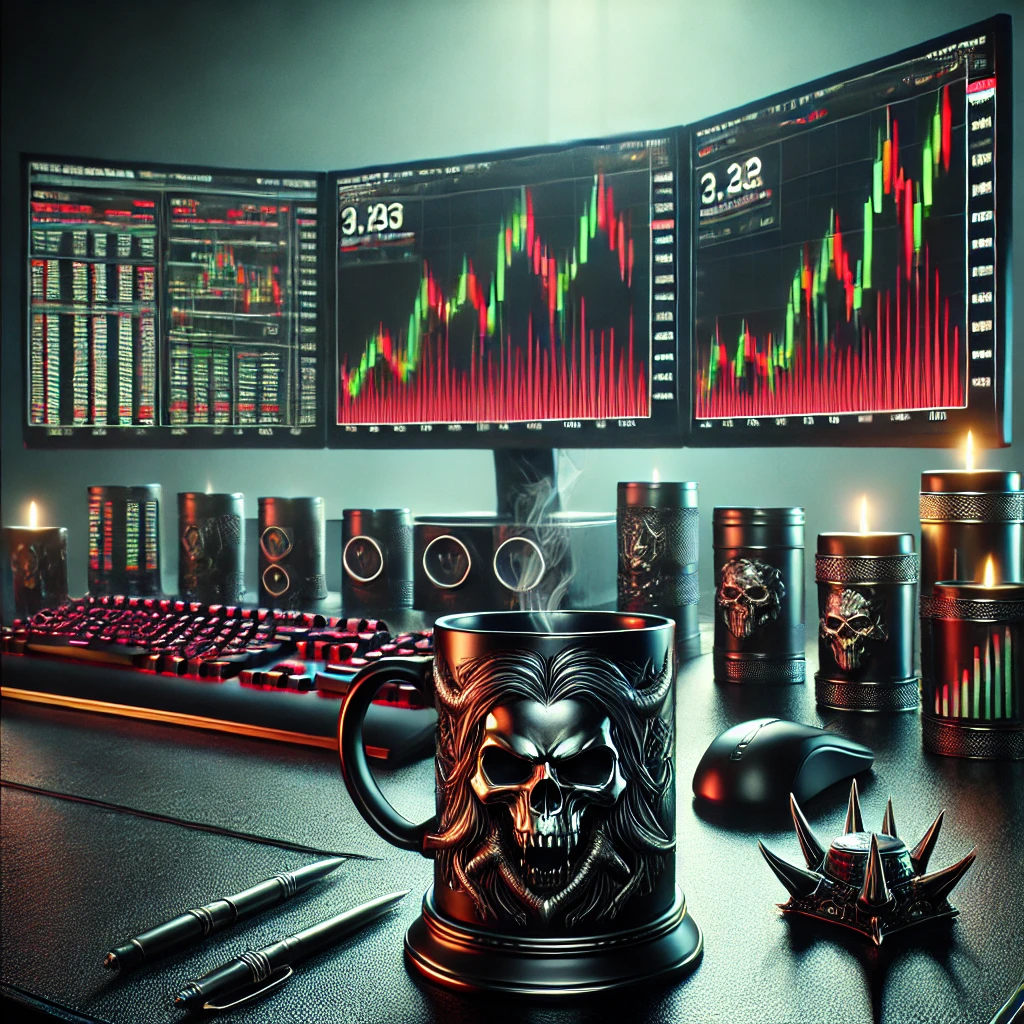
    A modern trading desk with chart-filled monitors and a unique mug, capturing the edgy spirit of coffee-fueled trading.

    Brew and Battle Stations


    Pushing Through Barriers
    Ultimately, the combination of hot coffee and a hungry mind is what turns pre-market scans into game-winning trades. It’s the intangible boost that says, “I’m awake, I’m ready, and I’m not backing down.” When the markets open and the volume surges, you’ve already established a groove—alert, prepared, and confident. You might still face losing streaks or misreads, but your caffeine ritual and rock-steady mindset can help you bounce back. Like an epic guitar solo right after a quiet interlude, coffee elevates your mental tempo, gearing you up for whatever the market decides to throw your way.

  • The Punk and Metal Roots of DIY Finance: Empowerment Through Knowledge

    The Punk and Metal Roots of DIY Finance: Empowerment Through Knowledge

    What do hardcore punk shows and personal finance have in common? More than you might think. Both celebrate DIY spirit, subverting mainstream norms, and calling BS on bloated institutions that profit off complacency. If you’ve ever gathered a ragtag group of friends to start a band in your garage, you already know what it feels like to forge a path with minimal resources and a maximum sense of rebellion. That same ethos can guide your approach to saving, investing, and managing money: no middlemen, no fluff, just raw, authentic control over your financial destiny.

    You’re not alone in feeling like large financial institutions don’t really have your best interests at heart. Much like you never trusted the slick, corporate label suits pushing out formulaic rock, you probably don’t trust banks that overcharge fees and lure you into subpar investments. If the raw power of a distortion pedal and a few power chords can start a cultural revolution, why can’t you channel that same energy to master your own finances? Welcome to the world of DIY finance—where knowledge is power, and you’re the one calling the shots.

    A Brief History of DIY Culture

    Zines, Underground Gigs, and Financial Freedom

    Before the internet made everything instantly shareable, the punk and metal scenes thrived on zines—handmade, photocopied magazines distributed by fans. These gritty, no-budget publications delivered unfiltered news and band interviews to local communities who were hungry for realness. It was a total middle-finger to mainstream media channels. Similarly, DIY finance flips off the conventional wisdom that says you must rely on big brokerages, pricey advisors, or complicated mutual funds.

    A report from the Federal Reserve highlights how self-education and a willingness to explore alternatives can break cycles of debt and poor savings habits. Just like a zine gave you the raw scoop on your favorite band, independent financial resources and online communities offer you unfiltered advice and tools you can use right now—often for free.

    Tools for DIY Investing

    Apps, Platforms, and Community Forums

    You don’t need to beg a record label to distribute your music in 2025—nor do you need a “traditional” brokerage account that charges you an arm and a leg to buy a few stocks. From user-friendly stock trading apps to decentralized crypto exchanges, your smartphone can be your backstage pass to the financial world.

    • Robo-Advisors: Platforms like Betterment or Wealthfront use algorithms to manage your portfolio.
    • Commission-Free Brokers: Apps like Robinhood and Webull let you trade stocks and crypto with zero commissions.
    • Decentralized Finance (DeFi): If you’re feeling extra rebellious, DeFi platforms allow peer-to-peer lending, borrowing, and yield farming without a central authority.

    And guess what? You can rock your self-made finance scene while sipping from unique coffee mugs for her if you want a little flair that screams, “Yes, I’m forging my own path, and I’m doing it with style.” Because who says your coffee mug can’t show off your bold personality or your DIY approach?

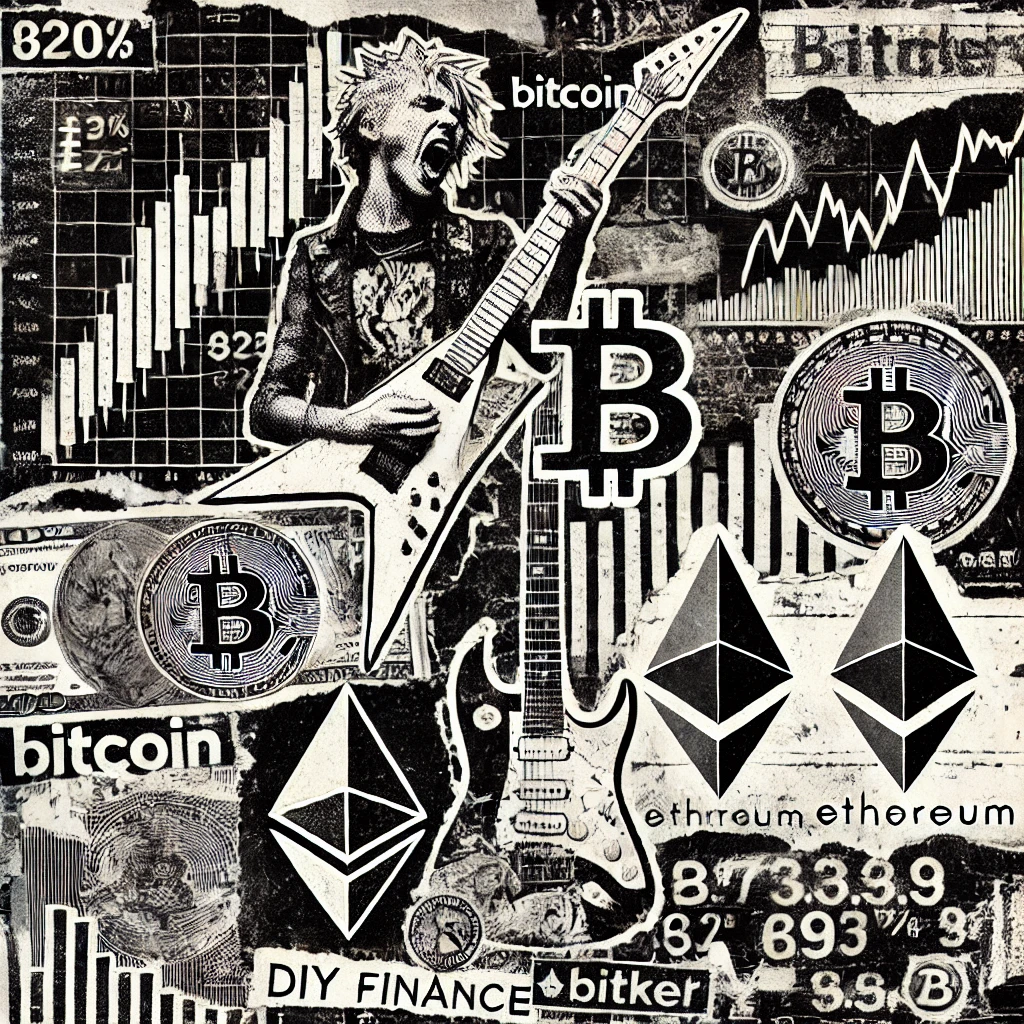
    collage of DIY finance imagery, including guitars, stock charts, and crypto logos, in a punk zine style

    Forge your own future, one riff and one trade at a time.

    Embracing Risk, Avoiding Exploitation

    The Rebellious Spirit of Self-Defense

    Punk and metal communities have always been about self-defense: from defending the pit to shielding subcultures from corporate whitewashing. Why not apply the same concept to your finances? Most people who haven’t taken the time to learn about budgeting, investing, and credit get trampled by hidden fees or unscrupulous advisors.

    A study by the Consumer Financial Protection Bureau (CFPB) indicates that many financial pitfalls—such as spiraling credit card debt or unreasonably high interest rates—can be mitigated with basic know-how and discipline. In a sense, you’re learning how to block a random shove in the pit. No one’s going to watch your back if you won’t.

    If you’re starting to wonder if there’s more going on behind the scenes of our financial system, you’re not the only one. Why not keep a conspiracy theorist coffee mug at your desk as a reminder to question everything? After all, metal and punk fans have a long history of bucking authority. Might as well carry that attitude into your 401(k) or crypto wallets, too.

    A Rallying Cry for the DIY Investor

    Knowledge = Empowerment

    • Budgeting: Like practicing guitar scales, budgeting is the fundamental skill that underpins everything else. If you can’t handle your day-to-day money, no fancy stock pick will save you.
    • Investing: Once you have extra cash, put it to work. Whether it’s a well-balanced stock portfolio, a few well-researched crypto bets, or some real estate crowdfunding, the point is to direct your cashflow into assets that can grow.
    • Continuous Learning: Punk and metal scenes thrive on discovering new bands, new sounds, new ways of self-expression. Apply that thirst for discovery to your finances. New platforms and opportunities pop up every day—keep exploring them.

    At its heart, DIY finance isn’t just about money—it’s about self-determination. You don’t let corporate radio stations decide what music you should listen to; why let a corporate advisor decide how to invest your hard-earned cash? The tools are out there; all it takes is the same rebellious spark that propelled your favorite band from garage nobodies to genre-defining legends.

    From gritty zines to unstoppable underground movements, punk and metal have always advocated for taking control when the mainstream just won’t cut it. The same is true for your finances: the less you rely on stuffy institutions, the more you learn, experiment, and define your own path, the more empowered you become. It’s not about being a lone wolf with no guidance; it’s about choosing resources and communities that respect your autonomy rather than draining it.

    Next time you’re blasting a relentless riff, picture applying that energy to evaluating your portfolio or tinkering with a new investment platform. The rebellious spirit that shaped your musical tastes can transform how you see money. Remember, every movement started with just a few idealists who refused to accept “the way things are.” You can carry that flame—channel the raw power of punk and metal into your wallet, your retirement account, or your everyday spending decisions. Because if there’s one thing these subcultures taught us, it’s that real change starts from the bottom, with people who dare to do it themselves.

  • Headbanging Through the Bear Market: Surviving Stock Slumps

    Headbanging Through the Bear Market: Surviving Stock Slumps

    The market is down, your stocks look like they’ve been drop-kicked into the underworld, and every headline screams doom. Sound familiar? It’s called a bear market, and if you’re not ready to fight for your sanity, it can chew you up and spit you out. But here’s the thing: if you’re a devoted metalhead, you’re already trained to endure chaos—whether it’s in the middle of a mosh pit or blasting brutal riffs in your headphones. Why not take the same no-nonsense attitude to your portfolio?

    Just like a surprise guitar solo can turn a song on its head, the market can flip overnight, leaving even seasoned investors shell-shocked. But as every metal fan knows, sometimes you’ve got to keep headbanging through the breakdown. So sharpen your elbows and crank up the amps, because we’re about to explore how to not only endure a bear market—but to come out of it stronger.

    The Bear Market Blues
    What It Is and Why It Happens

    A bear market occurs when stock prices tumble by 20% or more from recent highs, reflecting widespread pessimism. According to Investopedia, bear markets can be triggered by economic slowdowns, geopolitical upheaval, or even a sudden loss of investor confidence—just like how the mood at a metal show can shift if the crowd picks up on negative energy.

    Does that mean we should all throw in the towel? Hardly. Just like you wouldn’t quit on your favorite band the minute they release one weak album, you don’t bail on the market the moment things get choppy. Bear markets are an inevitable part of the economic cycle, and surviving them is how the real legends are born.

    Coping Mechanisms
    Budget, Diversify, and Headbang

    1. Reassess Your Portfolio
      • Bear markets can expose weaknesses—both in your holdings and your risk tolerance. Now’s the time to see which stocks (or funds) are truly worth holding and which are dragging you down. A little pruning can free up resources to invest in opportunities that may arise when prices are low.
    2. Build a Safety Net
      • If possible, maintain some cash reserves or stable assets so you’re not forced to sell at rock-bottom prices. It’s like wearing sturdy boots in the pit: you’ll thank yourself when the crowd starts pushing back.
    3. Stay Educated
      • Knowledge is your best armor. Dive into articles, talk to financial pros, and read up on market trends. The U.S. Securities and Exchange Commission (SEC) offers investor education resources that can help you spot scams and navigate turbulent times. The more you know, the less fear has a hold on you.

    And if the gloom starts getting to you, sometimes you need to send a clear message to the world—like sipping from a fuck off coffee mug that embodies your rebellious attitude. After all, if you’re wrestling with a bear market, you don’t have time for sugarcoated nonsense.

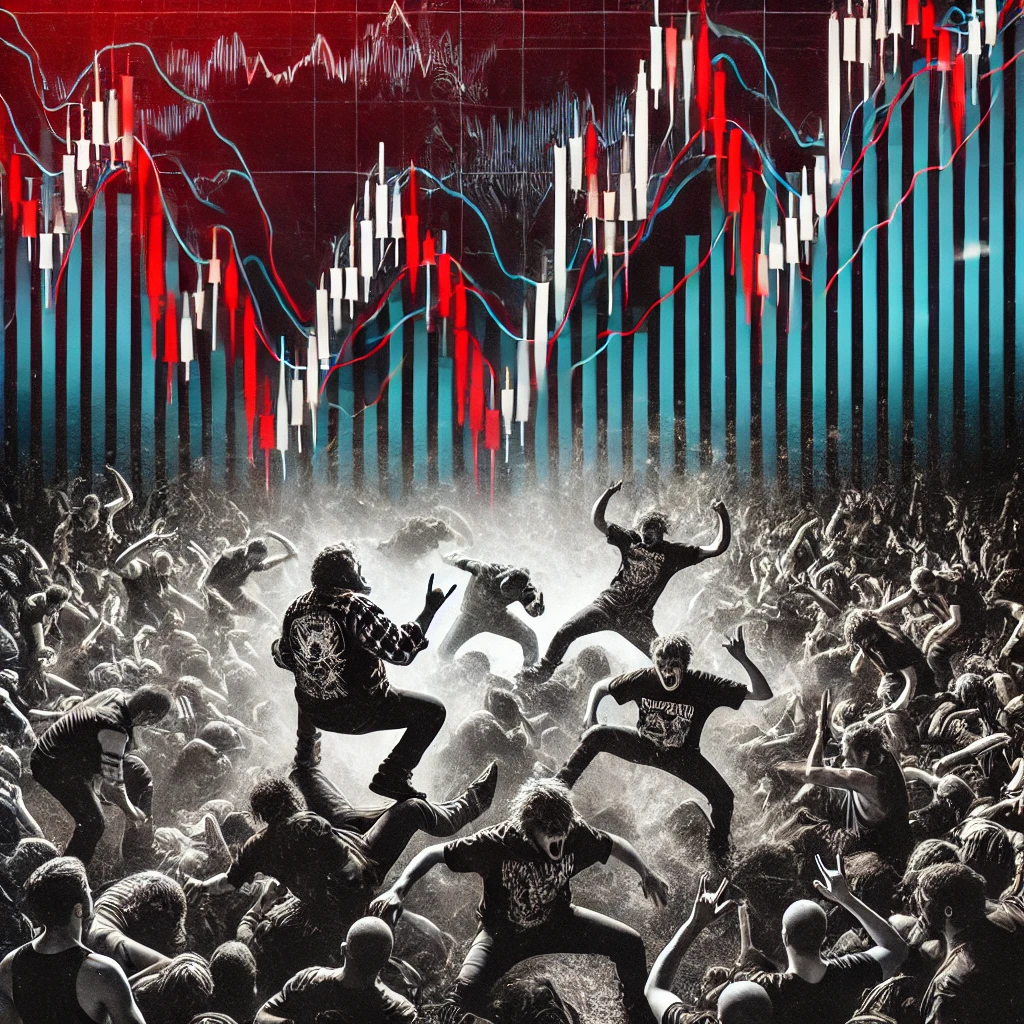
    crowded mosh pit set against a falling stock chart, symbolizing surviving a bear market with a metal mindset

    When the market tanks, crank up the volume—bear markets call for brutal riffs.

    Positioning for the Rebound
    Buying the Dip (Or Holding Until It’s Over)

    Most legendary metal records were forged in tough times—bands channeling real pain into epic anthems. Similarly, bear markets can be prime hunting grounds for savvy investors who spot undervalued stocks. Warren Buffett famously suggests being “fearful when others are greedy, and greedy when others are fearful,” implying that solid bargains emerge when widespread panic pushes prices too low.

    1. Focus on Quality
      • Even the strongest companies can tank in a bear market, but they’re also the most likely to rebound when sentiment flips. Keep an eye on essential industries like energy, healthcare, or innovative tech—think of them as your core rhythm guitar, anchoring your portfolio.
    2. Use Dollar-Cost Averaging
      • If you believe in an asset long term, spread your purchases over time instead of trying to guess the exact bottom. This approach balances out short-term price swings. No one nails the perfect entry point every time, and it’s better to join the song at a decent spot than to miss it entirely.
    3. Diversify with Alternatives
      • Cryptocurrencies or gold can sometimes buck the trend—or at least move to a different drumbeat—during stock slumps. Just be sure you understand the risks before diving in. According to Bloomberg, crypto markets can be even more volatile than equities, so approach them with caution.

    If you do dabble in Bitcoin during the chaos, you might as well stash it in style. A bitcoin-themed coffee mug can serve as a cheeky reminder that while the stock market might be tanking, there’s a whole other realm of digital possibility out there.

    A bear market might knock the wind out of your portfolio, but remember: metalheads don’t shy away from adversity—they crank the volume and plow straight through it. By budgeting wisely, diversifying, and maybe tapping into alternative assets, you can navigate the gloom and come out with some serious investing scars—AKA experience.

    You’ll come away with more than just bruises; you’ll have a refined strategy, a tougher psyche, and maybe even a new perspective on what “value” really means. So the next time red numbers flood your screen, think of it as the breakdown in your favorite song—brutal, intense, but ultimately setting the stage for a crushing comeback.

    In other words, keep your boots laced, your coffee scorching, and your riffs savage. Because a bear market can’t kill your spirit if you’re headbanging right through it.

  • Crypto and Traditional Finance: Bridging the Gap

    Cryptocurrencies are no longer just the domain of early adopters and tech enthusiasts; they’re steadily integrating into the world of traditional finance. This shift presents both immense opportunities and significant challenges, creating a landscape that demands careful navigation. As someone who spends their days staring at charts and crunching numbers, I’ve got a front-row seat to this evolution, and I’m happy to share my take with the DMM crew.

    The Dance of Two Worlds

    For years, crypto and traditional finance operated in separate spheres. Traditional finance, with its established institutions, regulatory frameworks, and long-standing history, seemed a world apart from the nascent, often volatile world of cryptocurrencies. However, the rise of blockchain technology, increased institutional interest, and the growing mainstream acceptance of digital assets have fueled a convergence. The Federal Reserve, for example, has been actively studying the implications of cryptocurrencies and digital assets on the financial system, signaling the growing importance of understanding this dynamic.

    One of the primary drivers of this integration is the need for diversification. Institutional investors, always seeking to optimize their portfolios, are starting to see cryptocurrencies as an alternative asset class. The relatively low correlation between crypto and traditional assets, such as stocks and bonds, can help to reduce overall portfolio risk. Plus, the potential for high returns, even if extremely volatile, is a major draw. Furthermore, we’re seeing more and more traditional financial institutions offer crypto-related products and services, such as custody solutions, trading platforms, and even ETFs.

    It’s not just about institutions either. The growth in the crypto derivatives market is another signal of this shift. Futures contracts, options, and other derivatives allow investors to gain exposure to cryptocurrencies without directly owning them. This has opened up new avenues for hedging, speculation, and arbitrage, further integrating crypto into the global financial system.

    Challenges on the Horizon

    Of course, this marriage isn’t without its tensions. The primary obstacle remains regulation. The crypto market is still largely unregulated, leading to concerns about investor protection, market manipulation, and financial crime. Different jurisdictions have taken different approaches to regulation, creating a fragmented and complex landscape. The lack of clear regulatory frameworks hinders institutional adoption, increases market volatility, and creates significant compliance burdens. The International Monetary Fund has also emphasized the need for globally coordinated regulatory efforts to mitigate the risks associated with crypto assets.

    Volatility, naturally, continues to be a major factor. The crypto market is known for its dramatic price swings, making it a risky proposition for traditional investors accustomed to more stable markets. Cybersecurity risks are another area of concern. The decentralized nature of cryptocurrencies means that they are vulnerable to hacks, scams, and fraud, which can lead to significant financial losses. The recent collapse of FTX, for example, highlighted the risks of poor governance, lack of transparency, and the need for rigorous due diligence.

    Opportunities and Innovations

    Despite the challenges, the convergence of crypto and traditional finance offers exciting opportunities. For one, it’s driving innovation in financial technology, or FinTech. The underlying technology behind cryptocurrencies, particularly blockchain, has the potential to revolutionize various aspects of finance, including payments, lending, and capital markets. We’re seeing the emergence of decentralized finance (DeFi) applications that aim to offer financial services without intermediaries.

    Furthermore, the integration of crypto is enhancing financial inclusion. Cryptocurrencies can provide access to financial services for people who are unbanked or underbanked, particularly in developing countries. They can also facilitate cross-border transactions, reducing costs and increasing efficiency. This all goes beyond mere speculation, and that’s something you need to remember.

    The convergence of crypto and traditional finance is also leading to new investment strategies and products. Crypto-focused hedge funds, venture capital firms, and private equity firms are deploying capital in the crypto space, creating new opportunities for investors. We’re seeing the development of tokenized assets, which represent ownership in real-world assets like real estate, art, and commodities. These tokens can be traded on blockchain networks, increasing liquidity and accessibility.

    My Take and What This Means For You

    From my perspective, the integration of crypto and traditional finance is not a question of *if*, but *how*. The market’s inevitable ebb and flow is creating both anxiety and opportunity. Those who can navigate this evolving landscape will be well-positioned to capitalize on new opportunities. It’s about staying informed, doing your research, and understanding the risks. Diversification is key, as always. Consider allocating a small portion of your portfolio to cryptocurrencies, but only what you can afford to lose. Never let hype drive your investments. Stick to your strategy, manage your risk, and don’t get caught up in the FOMO.

    Remember, the world of finance is in constant motion. Staying curious and adapting to change is crucial. I’m always learning, always refining my approach. It’s the same in this new, crazy world we’re living in. And when things get a little too wild, just take a deep breath, brew a fresh pot of coffee, and remember there’s always a solution. Even if the solution is simply a great coffee mug to get you through the day.

  • DeFi Decoded: Exploring the Decentralized Finance Ecosystem

    DeFi is the future, fam. Forget those slow-ass traditional finance systems. We’re talking about a whole new world of financial possibilities, where you can be your own bank, your own exchange, and your own everything. And let’s be real, the potential for insane gains is what really gets the blood pumping, right?

    What the Hell is DeFi, Anyway?

    Decentralized Finance (DeFi) is essentially a suite of financial applications built on blockchain technology, mainly Ethereum. The key word here is “decentralized.” This means no central authority, no banks, no gatekeepers. Just you, the blockchain, and a bunch of smart contracts that execute transactions automatically. Pretty badass, huh?

    Think of it like this: instead of going to a bank to get a loan, you can use a DeFi protocol. Instead of trading on a centralized exchange like Coinbase, you can use a decentralized exchange (DEX) like Uniswap. DeFi aims to replicate traditional financial services, but in a more transparent, efficient, and, dare I say, fun way. It’s like the Wild West of finance, and trust me, the opportunities are there for the taking!

    The Core Components of the DeFi Universe

    DeFi is made up of a bunch of cool projects, so let’s break it down into some core areas:

    Decentralized Exchanges (DEXs):

    DEXs are where you swap tokens directly with other users, without needing a middleman. Uniswap is the OG, but there are plenty more. They rely on Automated Market Makers (AMMs), which use algorithms to determine token prices and facilitate trades. It’s all about liquidity pools, fam. The more liquidity, the smoother the trades.

    According to a report by Chainalysis, DEX trading volumes have exploded in recent years, demonstrating their growing importance in the crypto space. They’ve become an essential part of the crypto trading universe. The ease of use and the fact you are in total control of your funds makes it a must.

    Lending and Borrowing Platforms:

    These platforms let you lend out your crypto and earn interest, or borrow crypto by using your existing holdings as collateral. Think of it like a decentralized bank, but way cooler. Compound and Aave are the big players in this game, offering various rates and options. Remember, the interest rates can fluctuate wildly, so you gotta stay on top of your game.

    A recent study by the Financial Stability Board highlighted the rapid growth of DeFi lending, noting the potential for systemic risk if not carefully managed. Always do your research! Don’t just blindly throw your hard-earned ETH into some sketchy protocol.

    Yield Farming and Liquidity Mining:

    This is where things get really interesting, and where the potential for HUGE gains (and massive losses) is. Yield farming involves putting your crypto to work by lending it out, providing liquidity, or participating in other DeFi activities to earn rewards. Liquidity mining specifically involves providing liquidity to a DEX and earning rewards in return.

    I’m talking about some serious passive income, bruv! According to CoinGecko, some yield farming opportunities have offered APYs (Annual Percentage Yields) in the triple digits. But be careful. It’s a high-risk, high-reward game. There’s always the risk of impermanent loss, rug pulls, and smart contract exploits.

    The Benefits: Why DeFi Is So Damn Exciting

    So, why should you care about DeFi? Here’s the lowdown:

    • Accessibility: Anyone with an internet connection and a crypto wallet can access DeFi services, regardless of their location or financial background.
    • Transparency: All transactions are recorded on the blockchain, so everything is out in the open.
    • Efficiency: DeFi transactions are often faster and cheaper than traditional financial transactions.
    • Innovation: DeFi is constantly evolving, with new protocols and applications emerging all the time.

    DeFi isn’t just a niche corner of the crypto world anymore; it’s rapidly transforming the financial landscape. It represents a paradigm shift, empowering individuals with unprecedented control over their financial lives. This shift also comes with challenges and risks.

    The Risks: Keep Your Eyes Peeled

    Nothing is risk-free in the crypto world, and DeFi is no exception. Here’s what you need to watch out for:

    • Smart Contract Risk: Smart contracts are the backbone of DeFi. If there’s a bug in the code, your funds could be at risk.
    • Impermanent Loss: If you provide liquidity to a DEX, you could lose money if the price of the tokens you’re providing changes.
    • Rug Pulls: Some DeFi projects are scams designed to steal your money. DYOR!
    • Volatility: Crypto prices can fluctuate wildly, so you could lose a lot of money very fast.

    Don’t just jump in blind. Do your own research! Read the whitepapers, check the code, and understand the risks before you invest. Also, it’s very important to note that DeFi can be a bit overwhelming at first. You’ll need to learn about wallets, gas fees, and how to interact with different protocols. There’s a learning curve, but once you get the hang of it, you’ll be trading like a pro in no time.

    If you’re looking for a crash course in DeFi, Investopedia has a great overview of the basics. To get deeper into the tech, check out this great resource from the FinTech Magazine. Stay informed, stay vigilant, and never invest more than you can afford to lose.

    Final Thoughts: The Future is DeFi

    DeFi is still in its early stages, but the potential is massive. It’s revolutionizing finance as we know it, and it’s opening up a whole new world of opportunities for traders like us. It’s a wild ride, and like any good adventure, you need the right tools.

    Remember, the best trades start when you’re well-caffeinated, so you’ll need the right mug to get the most out of every single trade. Speaking of which, wouldn’t you agree that it’s important to be prepared for anything? Grab the perfect Death Metal Mug to keep your coffee fresh while you’re glued to the charts.

    You know, some days I feel like I’m hunting for the next 1000x, and it takes some serious focus. Maybe I should’ve packed some extra supplies while I was Gone Squatching Coffee Mug before setting up the charts, I’d be even more ready.